

Municipal Vernal Pool Survey: Major Takeaways
Over the past couple of years, the Taking Action for Wildlife Team has heard growing interest from communities across New Hampshire in protecting vernal pools. In our work with conservation commissions, we are often asked: “What are other towns doing to protect vernal pools?” We realized we didn’t have a great answer. Much of the available information was out of date, and communities were looking for current examples of what is working.
To get a better picture of how municipalities across New Hampshire are protecting wetlands and vernal pools, we sent a survey to municipalities last spring. We had a strong response, with 88 New Hampshire municipalities providing information about their wetland and vernal pool protections. Much appreciation to all who took the time to complete the survey!
There’s no one-size-fits-all approach.
One of our biggest takeaways from the survey is that, like so many things in New Hampshire, it’s nuanced. There is no single, simple answer to the question of how towns are protecting wetlands and vernal pools. Municipalities are using a variety of approaches, often combining different tools and protections.
Of the 88 municipalities that responded:
- 59% identify wetlands and/or vernal pools as a community priority in their Master Plan.
- 80% include wetland protections in their zoning ordinances or regulations.
- The most common mechanisms for protecting wetlands are setback requirements (such as buffers) and overlay districts.
What about vernal pools specifically?
Thirty-seven municipalities reported that they specifically mention and protect vernal pools in their local zoning ordinances or regulations. Of those 37 municipalities, 19 protect vernal pools under their definition of a wetland, while the remaining 18 have a specific definition of vernal pools and/or separate protections for them.
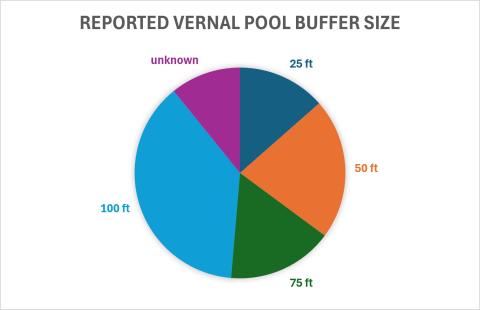
Where vernal pools are specifically protected, setbacks/buffers are the most common approach. Buffer widths range from 25 to 100 feet, with plenty of variation in how those protections are structured. Some municipalities define vernal pools based on specific size criteria, while others have different setback requirements depending on the type of land use or development being proposed.
The pie chart below provides a simplified breakdown of vernal pool buffer widths from the 37 municipalities that specifically mention and protect vernal pools in their local zoning ordinances.
The temporary nature of vernal pools adds another layer of complexity to protecting them. If a vernal pool is invisible for part of the year, how can a municipality make sure it is recognized and protected when development is proposed? We’ve also heard growing interest from communities in mapping vernal pools (or potential vernal pools) as a way to solve this problem, but their ephemeral nature also makes them very difficult to map. Of the 88 municipalities that responded to our survey, only 6 have mapped vernal pools across their entire municipality, while another 8 have mapped vernal pools on municipal lands only. We hope to learn more about how communities are tackling this issue and how those communities who have mapped them are using that information.
What’s next?
We’re continuing to work with the information we gathered through the survey to develop a resource that will make the results easier to share. Our hope is that when a community asks, “What are other towns doing?”, we’ll be able to point them toward a helpful, up-to-date resource with examples from communities across New Hampshire.
Stay tuned - we’ll share that resource when it’s ready!
Author(s)


