

Gardening for Wildlife
How Our Spaces can become Important Habitat
Across New England, a quiet transformation is taking place in backyards, schoolyards, and community spaces. Where tightly mowed lawns and ornamental shrubs once dominated, a growing number of gardeners are re-imagining their landscapes as living habitat and places that support birds, insects, and other wildlife. At the heart of this movement is a simple but powerful idea: by planting for pollinators using native plants, we can help restore the ecological relationships that sustain life around us.
At the same time, biodiversity is declining at an unprecedented rate, driven largely by habitat loss. Forests are fragmented, open lands are developed, and natural systems are increasingly replaced with human-designed spaces. Yet within this challenge lies an important opportunity. The very landscapes that have contributed to habitat loss including our yards, campuses, and community spaces can become part of the solution.
Across the country, more than 40 million acres are devoted to lawn. Reimagined, even a fraction of this land could support a remarkable diversity of life. A single yard may seem small, but collectively these spaces form one of the largest potential conservation networks available to us.
A Shift in Perspective
Gardening for wildlife begins not with a shovel, but with a shift in mindset. It asks us to move beyond aesthetics alone and consider function. Instead of asking, How does my yard look? we begin to ask, What does my yard do?
A landscape designed with ecological purpose provides more than visual appeal. It offers nourishment in the form of nectar, pollen, seeds, and foliage. It provides shelter in dense shrubs, tall grasses, and leaf litter. It creates space for nesting, overwintering, and raising young. And just as importantly, it reduces harm by minimizing pesticide use and limiting disturbances that disrupt wildlife.
Seen this way, a garden becomes something more than a collection of plants. It becomes a living system.
The Power of Native Plants
At the heart of this transformation are native plants. These species, shaped over thousands of years in partnership with local wildlife, form the backbone of healthy ecosystems. Unlike many ornamental plants introduced from other regions, native plants support the insects that sustain the food web.
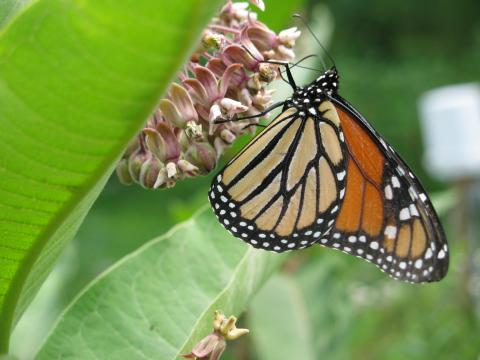
An adult Monarch Butterfly on Common Milkweed. Milkweed is the host plan for Monarchs.
This relationship is essential. Insects, particularly caterpillars, are a primary food source for birds. During the breeding season, even seed-eating birds depend on protein rich insects to raise their young. Research has shown that a single brood of chickadees requires thousands of caterpillars to successfully fledge. Without native plants to support these insects, the entire system begins to break down.
Some plants play an especially important role. Oaks (genus Quercus), for example, support hundreds of species of caterpillars, making them one of the most ecologically valuable trees in North America. When these relationships are restored, the effects ripple outward. More insects mean more birds, more pollination, and greater overall resilience.
It leads to a simple takeaway: if we want to support wildlife, we must first support the plants that sustain it.
Building Habitat: Think in Layers
A healthy wildlife garden mirrors the structure of natural plant communities. Rather than a single layer of lawn or flowers, it includes multiple layers of vegetation: canopy trees, understory branches, dense shrubs, and ground-level plantings. Each layer creates opportunities for different species to find what they need.
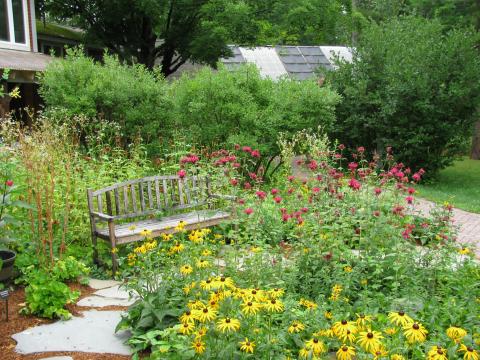
Pollinator garden at the NH Audubon McLane Center in Concord, NH. A diversity of plants support pollinators and other wildlife.
This layered approach also adds depth and texture to the landscape. A canopy of trees moderate temperature and provides nesting sites. Beneath it, shrubs offer cover for birds and small mammals. Perennials and grasses fill in the spaces between, while the forest floor and bare soil supports insects, fungi, and amphibians.
By incorporating this layered approach, even a small yard can support a surprising diversity of life.
Embracing the Seasons
One of the most transformative aspects of gardening for wildlife is learning to embrace natural cycles. In contrast to traditional landscaping, which often prioritizes control and uniformity, ecological gardening allows for a degree of wildness.
Gardening for wildlife also means embracing seasonal change. Many beneficial insects rely on features that are often removed in conventional landscapes. Native bees may nest and overwinter in hollow stems. Fireflies and moths spend part of their life cycle in leaf litter. Seed heads provide critical food for birds during the winter months.
Simple shifts in practice can make a big difference. Delay spring cleanup to allow insects to emerge. Remove mowing to create additional habitat. Leave stems and seed heads standing, and allow leaves to remain in garden beds.
What might once have been seen as untidy becomes, in this context, essential. The garden changes with the seasons, each phase supporting a different stage of life.
Small Features, Big Impact
Beyond plants, simple additions can significantly increase the value of a garden for wildlife. A shallow basin of water can sustain pollinators during dry spells. A pile of branches creates shelter for small animals. A fallen log becomes habitat for insects and fungi.
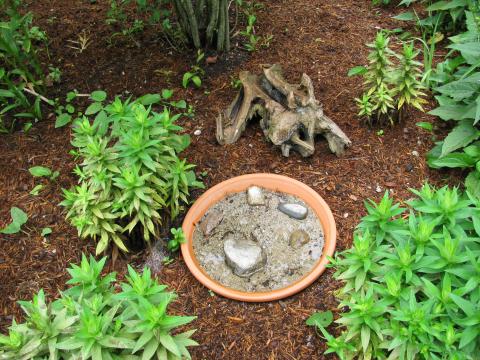
Puddler for pollinators.
Even the presence of a single dead tree (snags), left standing where safe, can provide nesting cavities for birds and mammals. These features are integral to a functioning ecosystem.
Reducing Harm
Creating habitat is only part of the equation. Equally important is reducing the pressures that wildlife faces. Pesticides, even those commonly used in home gardens, can have unintended and far-reaching effects on beneficial insects. Eliminating or minimizing their use is one of the most impactful steps a gardener can take.
Other changes are just as important: reducing lawn area, controlling invasive species, dimming outdoor lights at night, and making windows safer for birds. Each action helps tip the balance toward a more supportive environment.
Supporting Pollinators Through the Seasons
Pollinators are often the focus of wildlife gardening and for good reason. Their role in plant reproduction is vital, and their needs extend far beyond a single season.
Early spring flowers provide critical resources for bees emerging from winter dormancy. Summer brings an abundance of blooms, while late-season plants sustain migrating butterflies and prepare insects for the months ahead. A garden that offers continuous bloom becomes a reliable source of nourishment across the year.
Equally important are the less visible needs: host plants for caterpillars, nesting sites in soil and stems, and undisturbed spaces where life cycles can unfold.
A Connected Landscape
While a single garden may seem modest, its impact extends beyond its boundaries. As more people adopt wildlife-friendly practices, individual spaces begin to connect, forming corridors that allow species to move, feed, and adapt.
These networks are increasingly important as climate change alters habitats and shifts species ranges. Native plant gardens help buffer these changes, cooling local environments, improving soil health, and reducing runoff. They also store carbon, contributing in small but meaningful ways to climate mitigation.
In this way, local actions contribute to global resilience.
Getting Started
For those new to this approach, the path forward does not require a complete overhaul. Change can begin with a single decision: planting a native tree, replacing a patch of lawn, or simply choosing to leave the leaves in place.
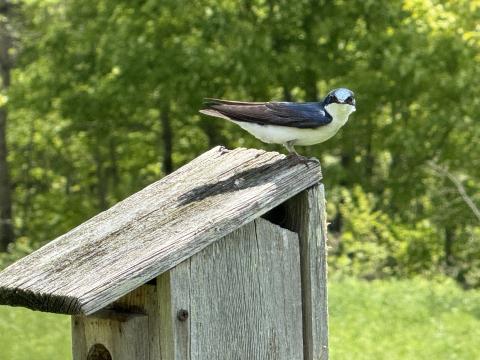
Tree swallow on a nest box - an example of a simple step to provide habitat for wildlife.
Over time, these small steps accumulate. A corner becomes a garden, a garden becomes habitat, and habitat becomes part of a larger whole.
A New Way of Seeing
Perhaps the greatest reward of gardening for wildlife is the shift in perception it brings. A yard is no longer just a backdrop. It becomes a place of discovery. Bees move from flower to flower. Birds forage and nest. Butterflies linger, then move on. These moments connect us to the rhythms of the natural world and remind us that we are part of it.
Every yard holds this potential. Every garden can contribute. And in choosing to garden for wildlife, we take part in something larger than ourselves. Gardening for wildlife is a quiet but powerful act of restoration, unfolding one landscape at a time.
Selected References
- Cane, J. H., Griswold, T., & Parker, F. D. (2007). Substrates and materials used for nesting by North American bees.
- Edwards, C.B. et al (2025). Rapid butterfly declines across the United States during the 21st century.
- Goulson, D. (2019). The insect apocalypse, and why it matters. Current Biology.
- Goulson, D., et al. (2015). Bee declines driven by combined stressors.
- IPBES. (2025). Assessment Report on Pollinators, Pollination and Food Production.
- Narango, D. L., Tallamy, D. W., & Marra, P. P. (2018). Native plants improve breeding success in birds.
- Ollerton, J., et al. (2011). How many flowering plants are pollinated by animals?
- Pleasants, J. M., & Oberhauser, K. S. (2013). Milkweed loss and monarch decline.
- Tallamy, D. W. (2020). Nature’s Best Hope.
- Tallamy, D. W., & Shropshire, K. J. (2009). Lepidopteran host use of native vs. non-native plants.
- Xerces Society
All photos in this article were taken by Diane DeLuca, NH Audubon.

